
Summarise this with AI
Opens your assistant with this article already loaded.
Key highlights
- A charger gets its own circuit, so the board needs a spare way for it.
- It also needs its own safety switch, which a lot of older boards do not have.
- Ceramic fuses mean the board is pre-1990s and almost always needs work.
- Circuit breakers with no safety switches is the estate-era board, and usually just gets added to.
- A board is assessed by looking at it, never by the age of the house.
- Anything found on install day is a second visit, which is what checking first avoids.
What a Charger Actually Needs From a Board
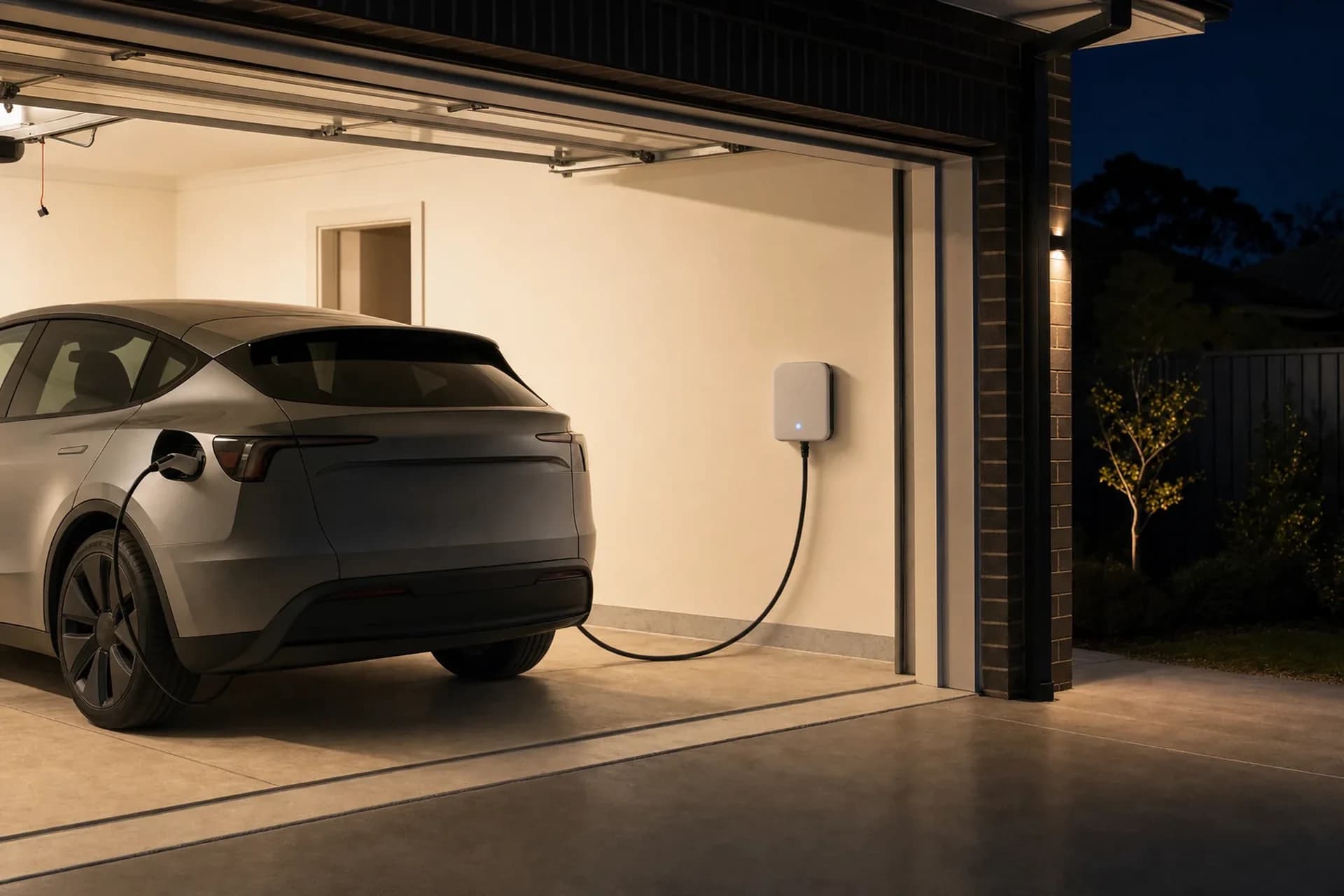
A wall charger is not an appliance you plug in. It is wired as its own circuit, which means it takes up space in the switchboard and it brings two devices with it.
The first is a circuit breaker sized for the charger, which protects the cable from carrying more current than it is rated for. The second is a residual current device, the safety switch that cuts power within milliseconds if current starts leaking to earth through a person or through damaged insulation.
So the two questions about your board are simple. Is there physical room for those two devices, and is the board in good enough condition to hold them safely.
How to Read Your Own Board in a Minute
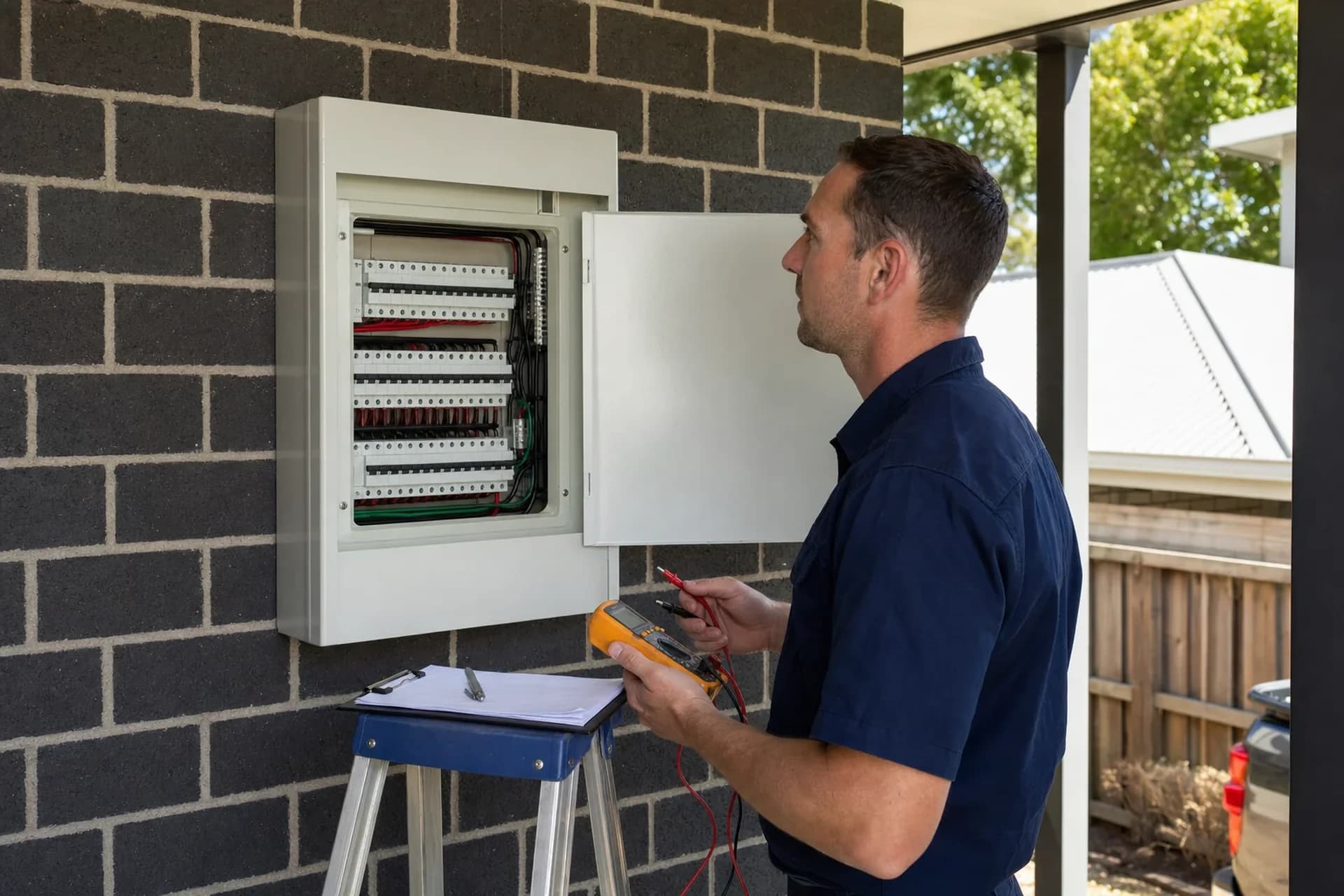
Open the meter box door and look at the row of switches. What you are looking for is what kind of protection is there and whether there is a gap.
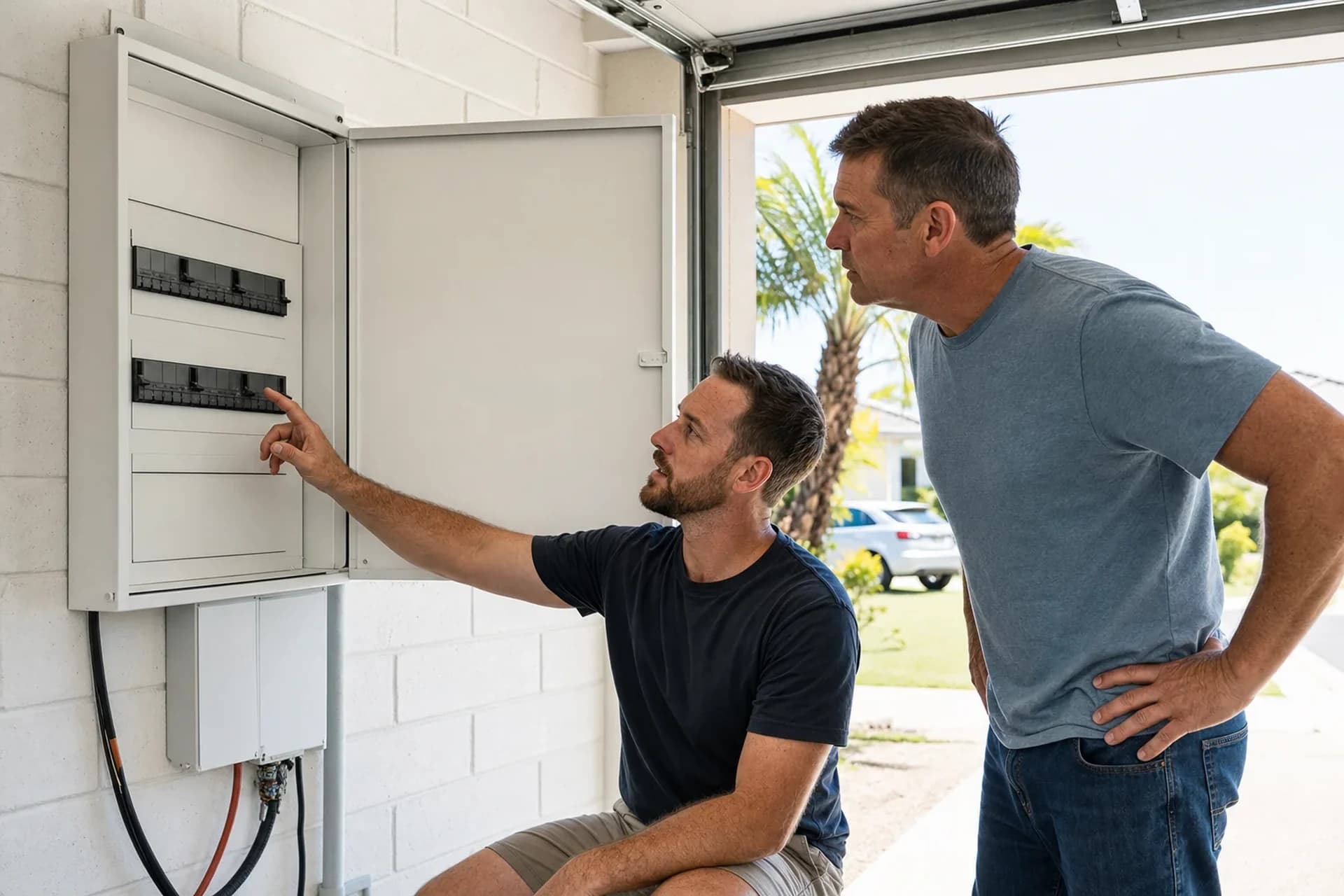
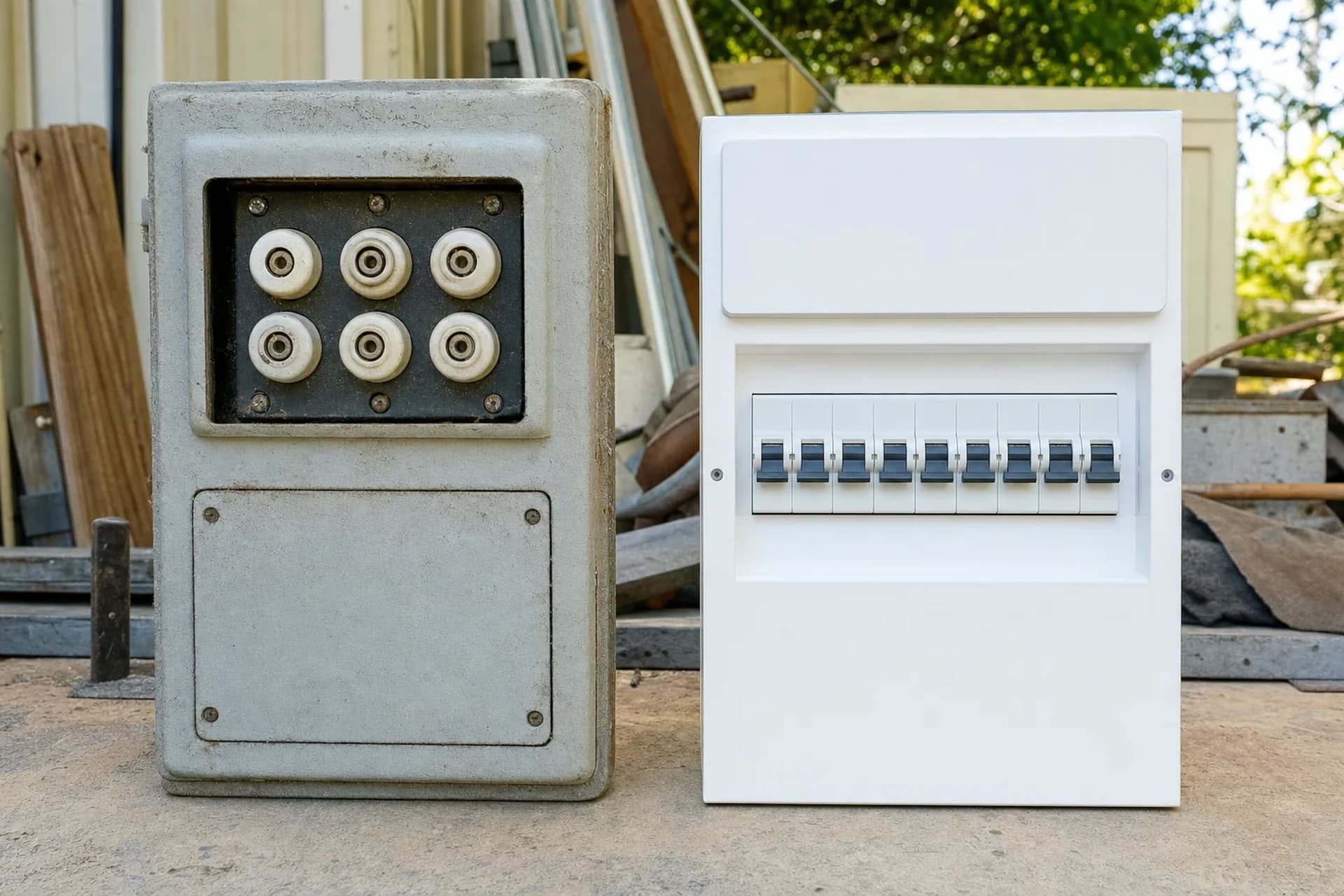
- Ceramic fuses. Round screw-in holders, usually white or brown. This is a pre-1990s board and it will need work before a charger goes on it.
- Plain circuit breakers. Small switches in a row, each labelled. Common on estate-era boards. It has protection, but often no safety switch.
- Safety switches. Wider devices, often with a small test button. If you have these on the power and light circuits, the board is in reasonable shape.
- A gap on the rail. Empty space beside the switches is a spare way, and it is the cheapest thing your board can have.
The Three Things That Happen Next
Once someone has looked at the board, one of three things follows, and the difference between them is where the cost sits.
- 1
Nothing. There is a spare way and the board already has residual current protection. The charger's own devices go in and the board is untouched otherwise. This is the newer estate home.
- 2
Added to. The board is sound but tight, so a small extension or a rearrangement makes room. Most common on boards from the eighties and nineties.
- 3
Replaced. No room, no protection, or the board itself is in poor condition. The board comes out and a new one goes in. This is the older beachside housing, and it is a job worth doing regardless of the car.
What Turns Up Where on the Gold Coast
There is a rough geography to this and it follows when the housing went up.
Through Southport, Labrador, Miami and the older streets near the beach, a lot of the stock was built between the fifties and the eighties, when a board had to run a stove, a hot water service and some lights. Those boards are frequently full and frequently have no safety switch.
Through Robina, Varsity Lakes and the master-planned estates the boards are a generation newer. They have circuit breakers and sound wiring behind them, and what they usually lack is the safety switch for the new circuit.
Through Coomera, Pimpama and the northern estates the boards are modern, have spare ways and already carry safety switches. Those are the easiest installs anywhere on the coast.
One Thing That Only Happens Near the Beach
If your board is mounted outside within a few streets of the water, salt air gets into it. Hinges seize, the bottom edge of the enclosure rusts through, and the terminals inside pick up a film that stops them gripping properly.
A loose terminal matters more once a charger is on the board, because a charger draws steadily for hours at a time and a poor connection under sustained load heats up. Corroded gear gets replaced rather than worked around.
How to Avoid a Second Visit
Almost every bad story about this job is the same story: nobody opened the board until the day of the install, the board needed work, and the job stopped.
It is avoided by looking first. A photo of the board with the door open, clear enough to read the switches, is usually enough to tell you which of the three outcomes above you are in before anyone books a date.
Questions People Ask
Look for a device that is wider than the others, usually with a small test button on the front, often marked with a T.
If every switch on the rail is the same narrow size with no test button, the board has circuit breakers and no residual current protection.
Age on its own does not decide it. A nineties board generally has circuit breakers and sound wiring, which is a good starting point.
What it often lacks is a spare way or a safety switch, so the usual outcome is adding to the board and not replacing it.
No. A charger draws a steady high current for hours, which is different to how anything else in a house behaves.
It gets a dedicated circuit sized for it, with its own protection. Sharing a circuit is how you get nuisance tripping at best.
Usually not. Work inside the switchboard is done by the electrician and does not change your connection to the street.
Energex only becomes involved if the supply itself changes, for example going from single phase to three phase.
If the board is old enough to need it, yes, because it is worth doing on its own merits.
If it is sound, there is nothing to gain by doing it early. Have it looked at, then decide with the actual answer in front of you.