
Summarise this with AI
Opens your assistant with this article already loaded.
Key highlights
- New EVs sold in Australia use Type 2, so the connector is not a deciding factor.
- Your supply decides the ceiling: single phase caps at about 7kW whatever you buy.
- A charger that talks to your inverter is the single biggest running-cost difference.
- Tethered has the cable attached. Socketed takes any cable and looks tidier.
- Load sharing matters the day a second EV arrives, and it is cheaper to plan for now.
- A charger that stops working when the wifi drops is a charger you will resent.
Why There Is No Single Best One
Charger comparisons read like phone reviews, as though one unit wins and the rest are compromises. Installations do not work like that.
A charger that is perfect in a Coomera house with three phase and twenty panels is the wrong purchase in a Southport unit with single phase and a shared car park. Nothing is wrong with either unit. They are answers to different questions.
So the useful exercise is not finding the best charger. It is answering six questions about your own place, after which two or three units are obviously suitable and the rest are not.
The One Thing You Can Stop Worrying About
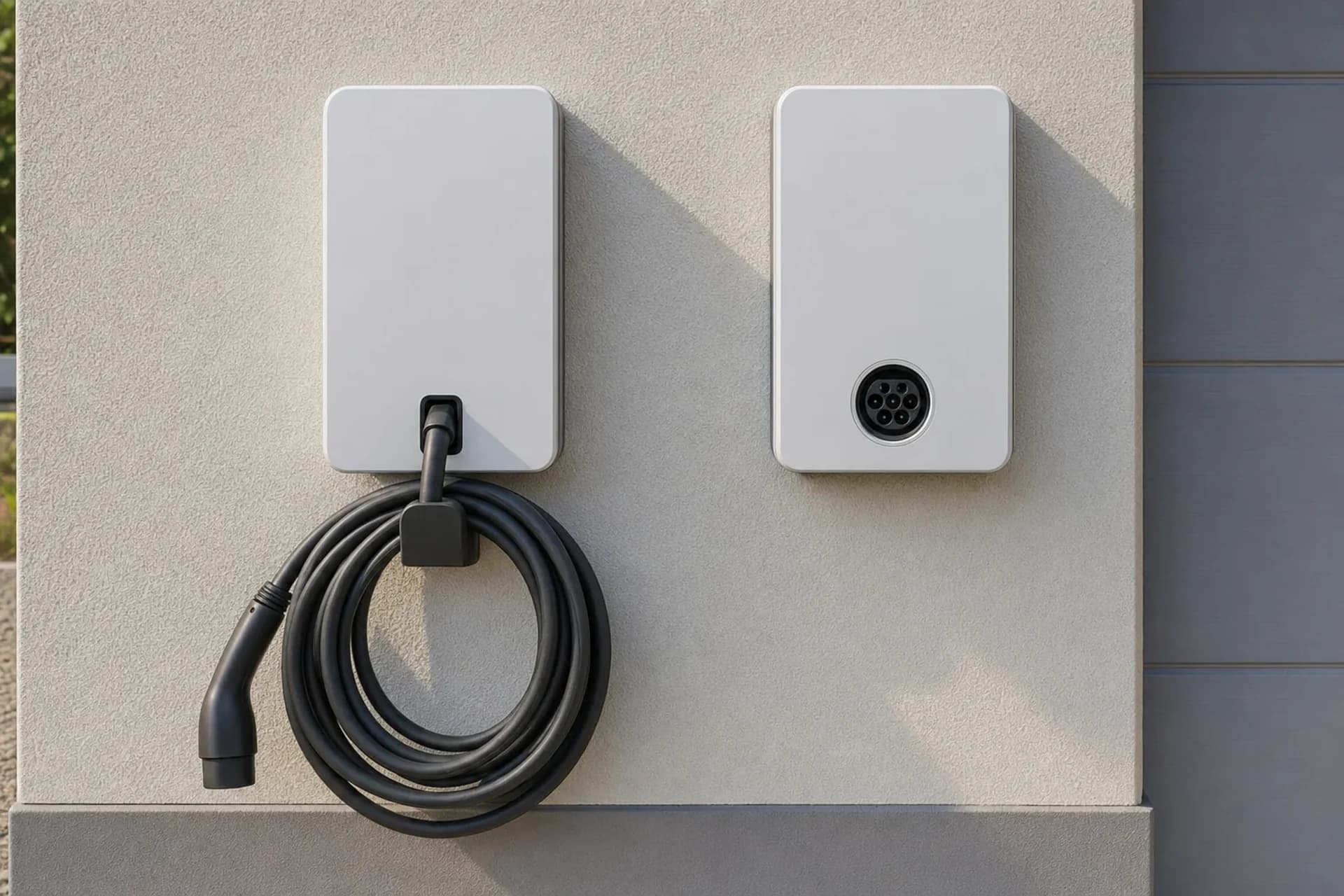
Every new EV sold in Australia charges on AC through a Type 2 connector, which is the seven-pin socket you will see on the car and on the charger.
That includes Teslas sold here. It means a charger bought today will suit the next car as well as this one, and it is why the connector should not be a deciding factor in what you buy.
The Six Questions That Decide It
- 1
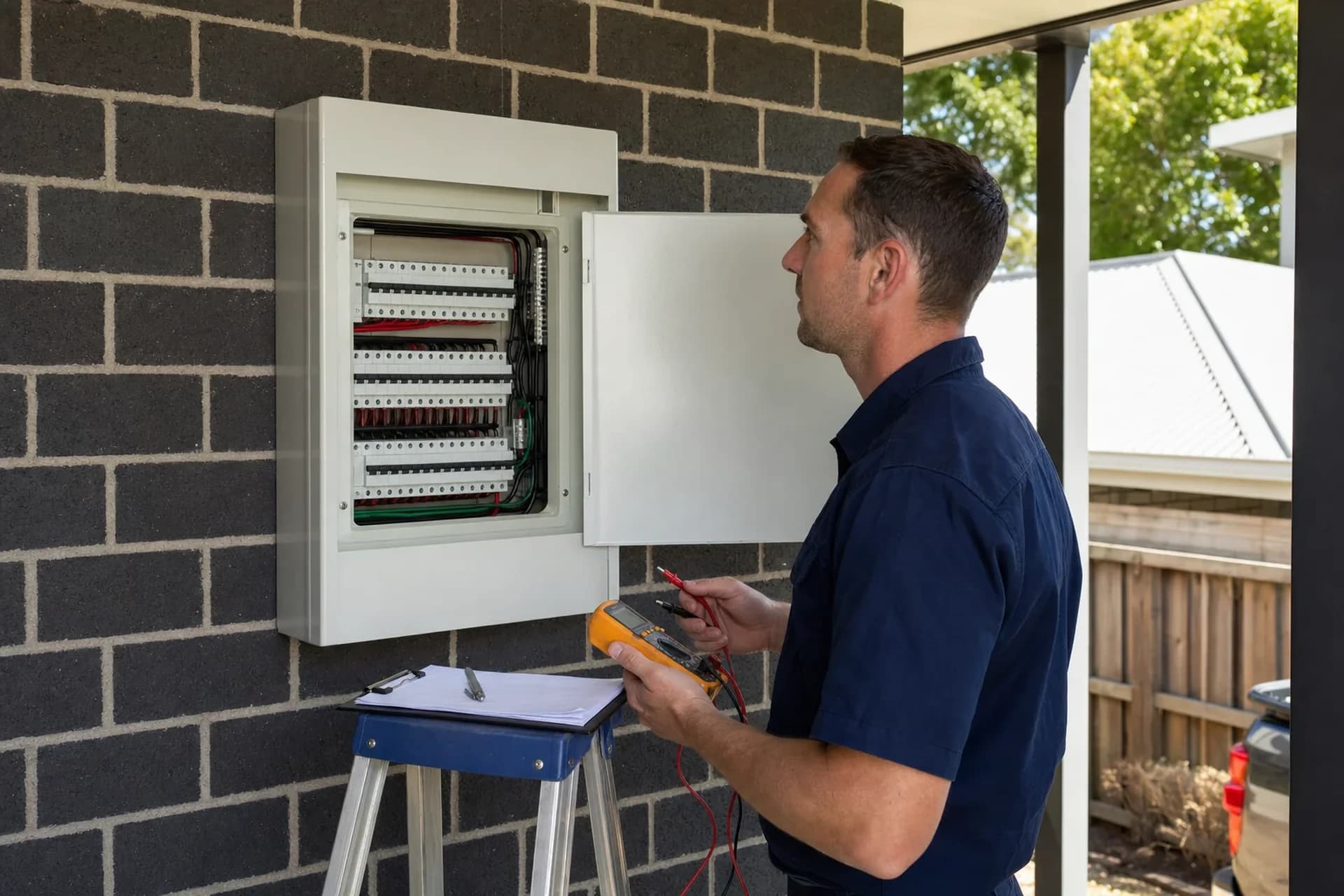
What supply do you have. Single phase caps you around 7kW no matter what the unit is rated for. Buying 22kW capability you cannot use is money spent on a number.
- 2
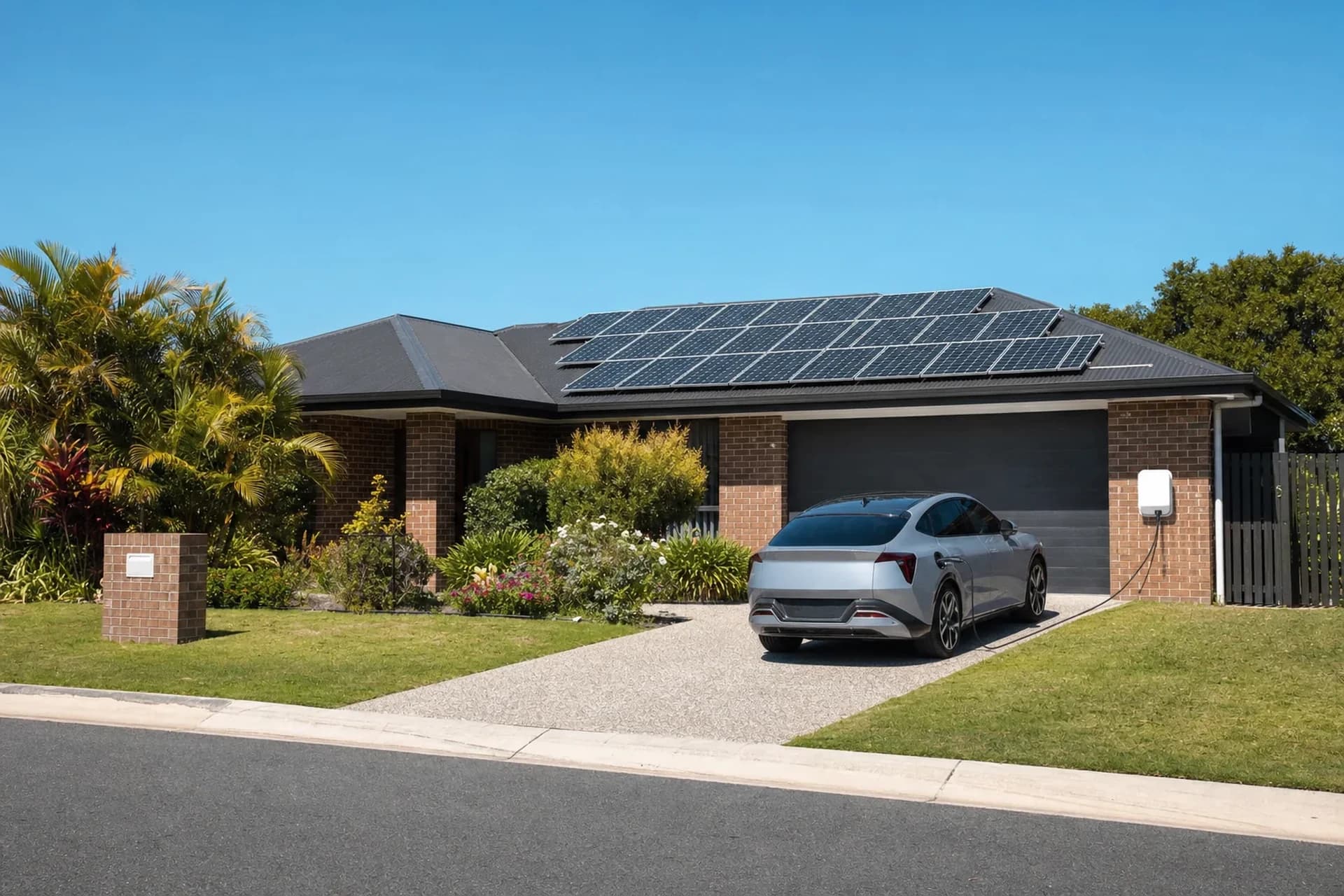
Does it need to see your solar. If you have panels, a charger that can run on your surplus changes what charging costs you. It has to be compatible with your inverter, so name the brand early.
- 3
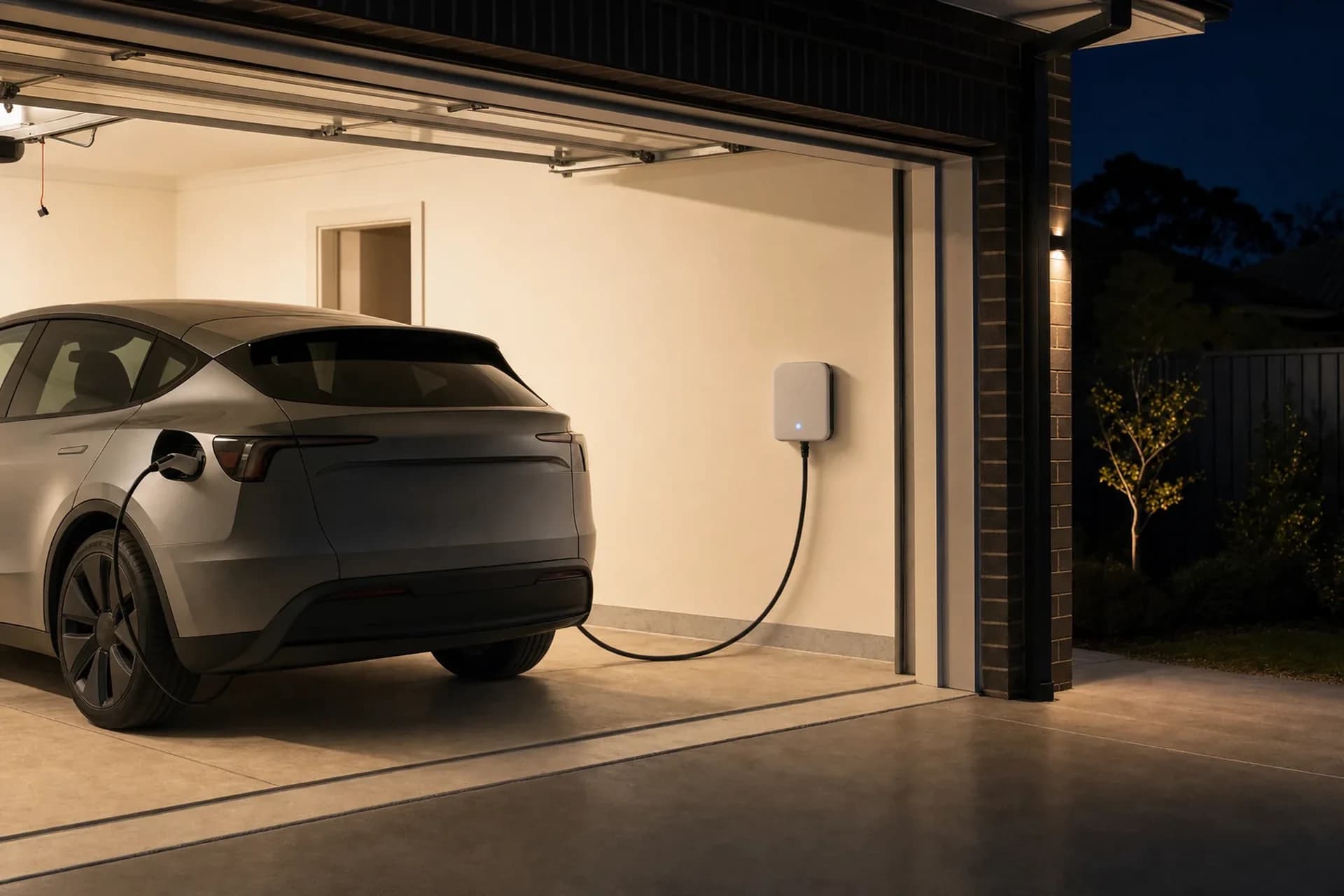
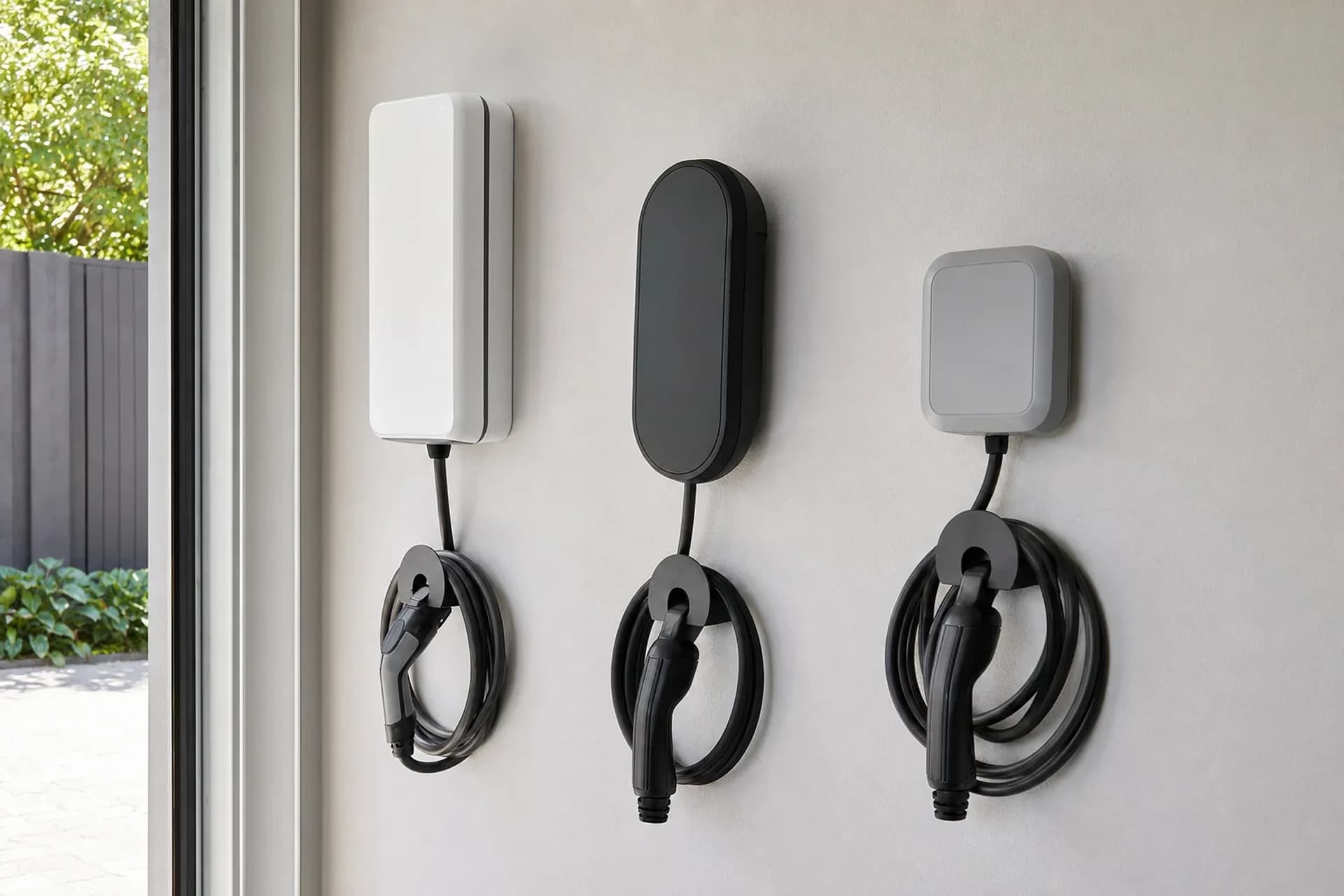
Tethered or socketed. Tethered has the cable permanently attached and is one less thing to carry. Socketed takes any Type 2 cable, looks tidier on the wall, and suits a shared or public-facing spot.
- 4
Will two cars share it. Load sharing splits one supply between two chargers so neither trips the house. Planning for it now is far cheaper than retrofitting it later.
- 5
What happens when the wifi drops. Some units keep charging on their last settings and some stop being useful. Ask this one specifically, because it is the difference people complain about.
- 6
Who stands behind it. An Australian supply chain, a real warranty and someone certified to commission it. A cheap unit with no local support is the expensive option later.
Indoors, Outdoors and the Gold Coast Difference
A charger in a garage lives an easy life. A charger on an exterior wall is in weather, and on this coast that means salt.
Within a few streets of the beach, salt air works on anything mounted outside. Enclosures need to be properly sealed and the fixings need to be stainless, because ordinary zinc screws will weep rust down a rendered wall inside two summers.
If the choice exists, putting the unit under cover is the better call and it costs nothing extra.
Which Smart Features Earn Their Keep
Most chargers sold now have an app. What matters is whether the features behind it do something you will use.
The ones that pay for themselves are scheduling, so the car charges on a cheaper overnight rate, solar surplus charging, and load management so the charger uses whatever the house is not drawing. Those three change what you pay or whether the job needs a supply upgrade at all.
Usage reporting and notifications are pleasant and change nothing. Buy them if you want them, and do not let them decide the purchase.
Narrowing It Down Without Reading Twenty Reviews
Answer the six questions, then ask an installer which units meet all six at your property. The list is usually short, and often two of them are equally good.
At that point pick on the things you can judge yourself: how it looks on the wall, how the app behaves, and what the warranty says.
Questions People Ask
No. It charges a Tesla and it will charge most other EVs, because it uses the same Type 2 connector every new EV sold here takes.
It is a common choice in households that are not sure what the next car will be.
Either works. Buying through the installer usually means the warranty, the supply and the commissioning sit with one party, which is simpler if something goes wrong.
If you buy it yourself, check it is an Australian-supplied unit and that your installer is certified to commission that brand.
Not at home. Your supply sets the speed, so on single phase a cheap 7kW unit and an expensive one charge at the same rate.
What the extra money buys is solar integration, load sharing, build quality and support.
Physically yes, and it needs an electrician at both ends to disconnect and reinstall it.
Many people leave it, because a charger on the wall is a selling point and the next house may suit a different unit anyway.
The portable cable that comes with the car draws about 2kW from an ordinary power point, which is roughly a third of a single phase wall charger.
It is fine occasionally. It is not intended as the way you charge every night, which is what a dedicated circuit and a fixed charger exist for.