

EV Charger Brands We Install
EV charger brands we install across the Gold Coast, chosen because we know them well, not because they were cheapest that month. Here is every unit we supply, what each one is genuinely good at, and the questions that decide which one belongs on your wall.
Tesla certified
to install and commission the Wall Connector
Sigenergy certified
for solar, battery and EV as one system
Eight units
supplied, installed and serviced



The Chargers We Supply
Eight units, and a straight answer under each one about who it actually suits and what to watch for before you commit to it.

01 / 8
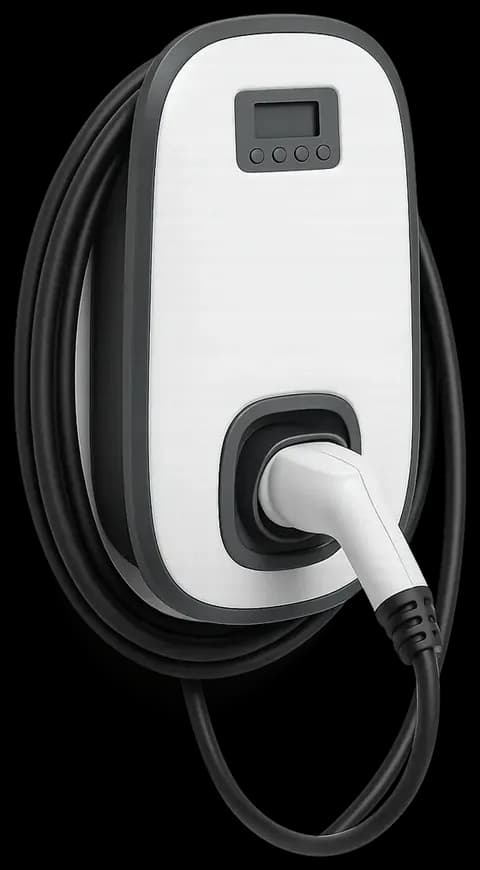
Ocular IQ Home Solar
Charges off spare solar, with three modes to pick from.
A smart home charger that reads your solar through a CT clamp and puts the surplus into the car. Three charging modes, all run from the app, and it works with any EV on Type 2.
- Who it suits
- A home with solar and any inverter brand. It reads the solar through a CT clamp, so it does not need a matching inverter to charge off the surplus.
- What to watch
- IP55, the same weather rating as the EcoFlow. Fine under cover; on an exposed wall near the beach, talk to us about where it goes.
- 7.2kW single phase
- 22kW three phase
- Three charging modes
- Solar charging via CT clamp
- App control
- IP55
02 / 8
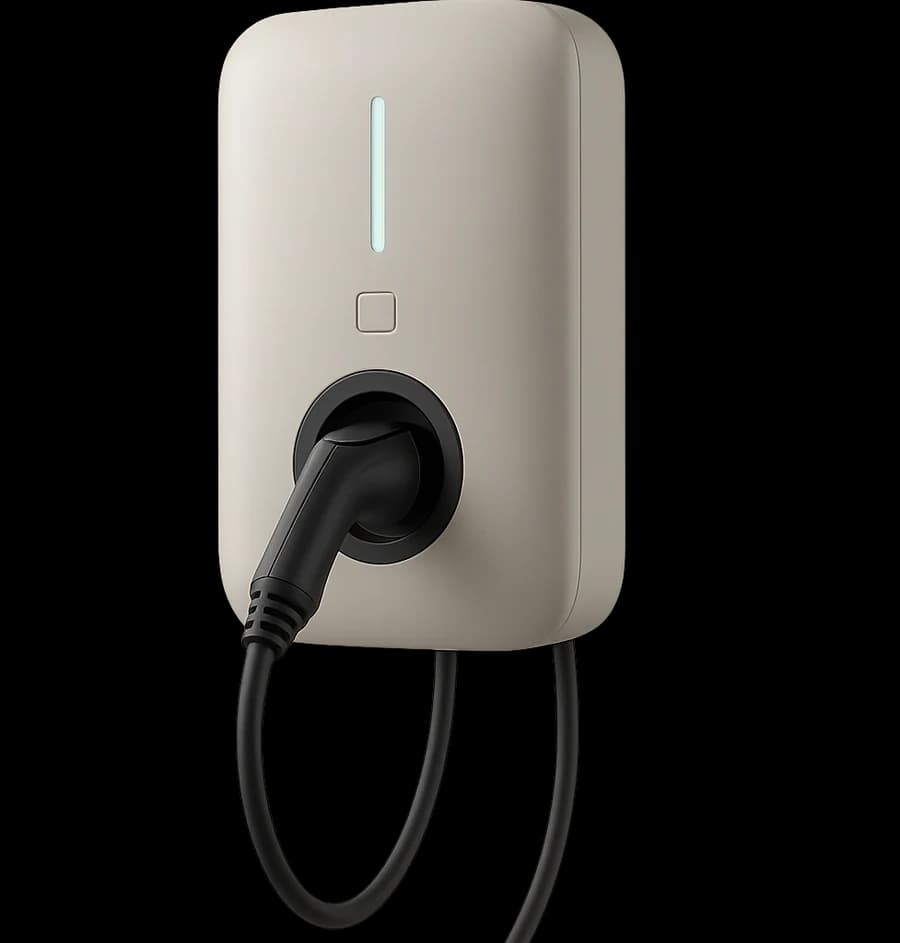
myenergi zappi
Built to top up the car from solar you would export.
One of the best known solar chargers. Its Eco and Eco+ modes send spare solar to the car instead of the grid, and it comes with the cable fixed on or as a socket.
- Who it suits
- A solar home that exports a lot during the day. Eco+ waits for spare solar and charges the car with it, which suits a car that sits at home through the day.
- What to watch
- Choose tethered or untethered before it is ordered. Untethered means you plug in your own cable each time, which some people like and some do not.
- 7kW or 22kW AC
- Single and three phase
- Tethered or untethered
- Eco and Eco+ solar modes
- Built in RCD
- IP65
03 / 8
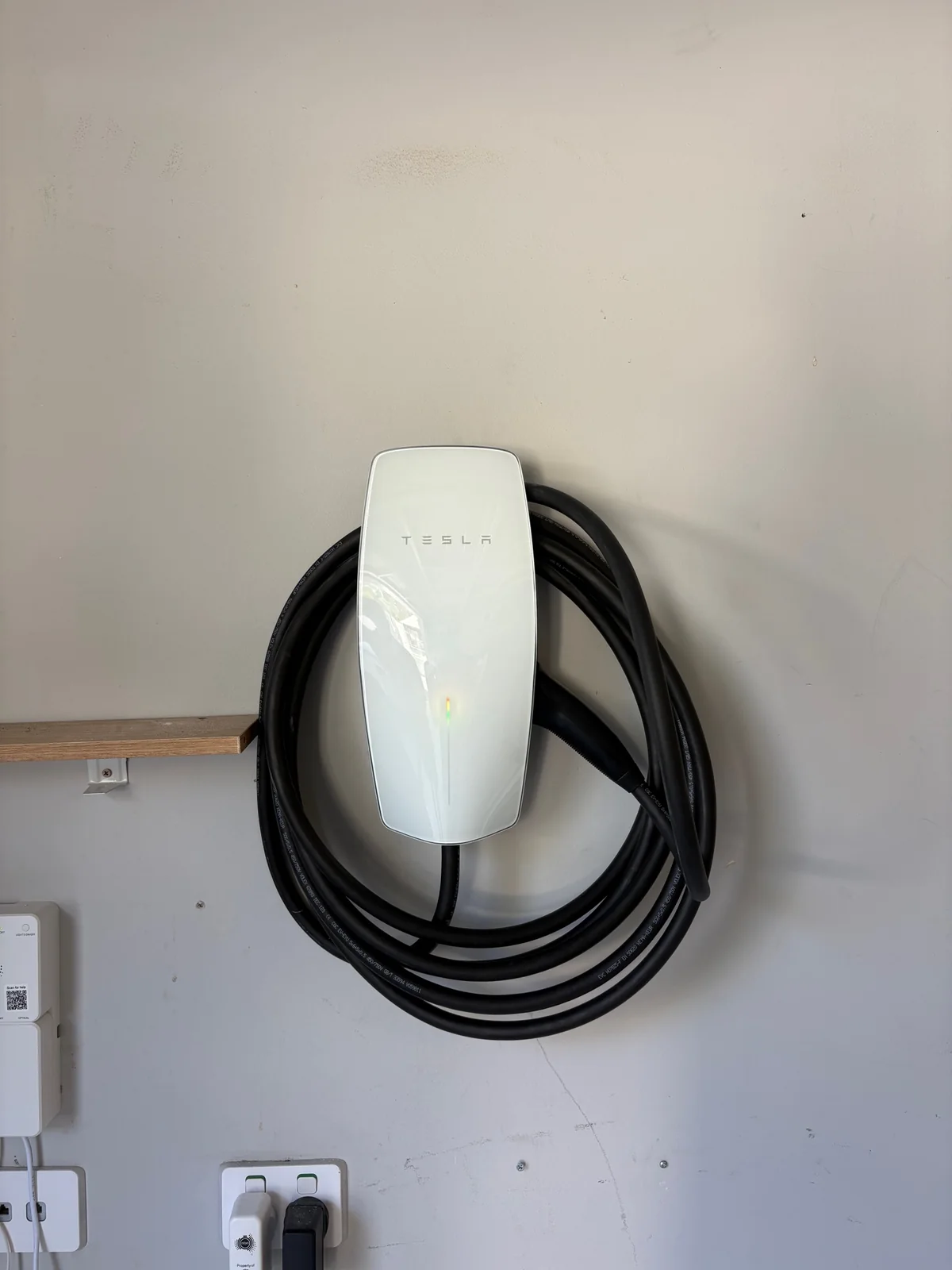
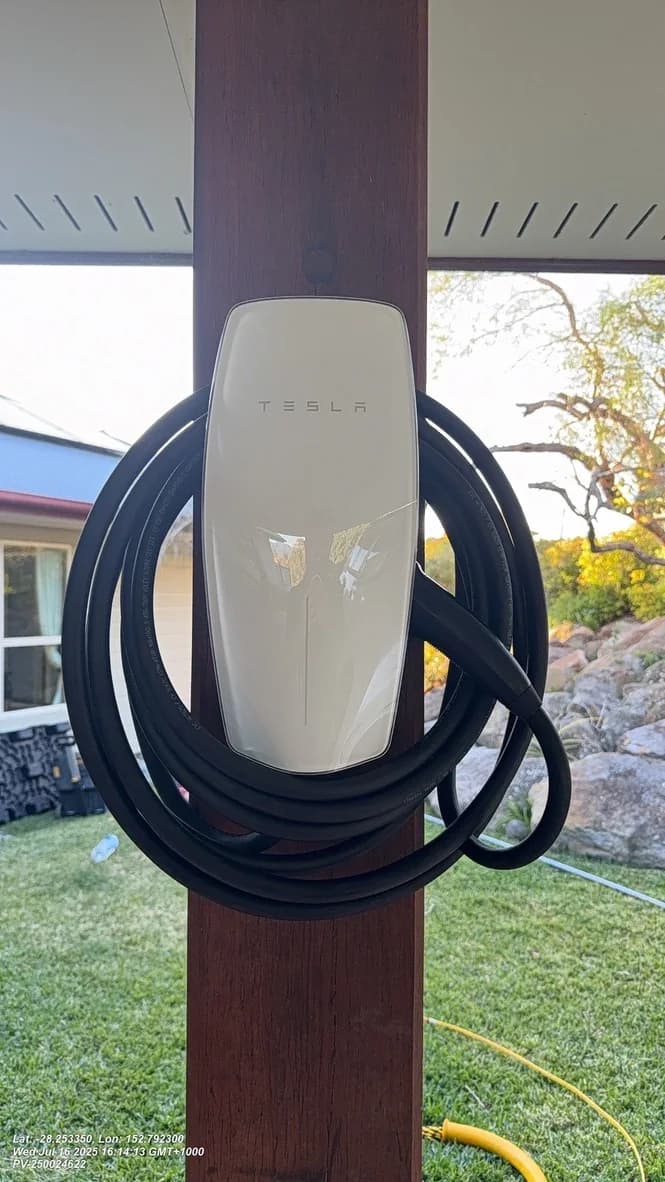
Tesla Wall Connector
Charges a Tesla, and most other EVs on Type 2.
Australia's most common home charger. Charges a Tesla perfectly and will charge most other EVs on the Type 2 standard, so it outlasts the car you own now.
- Who it suits
- A Tesla, or any household that wants the most common charger in the country on the wall. It charges most other EVs on Type 2 as well, so it survives a change of car.
- What to watch
- It has to be commissioned by a certified installer for the Tesla warranty to stand. We are certified, so ask whoever else you are quoting whether they are.
- Up to 22kW AC
- Single and three phase
- Type 2 connector
- Wi-Fi
- Power sharing
- 7.3m cable
04 / 8
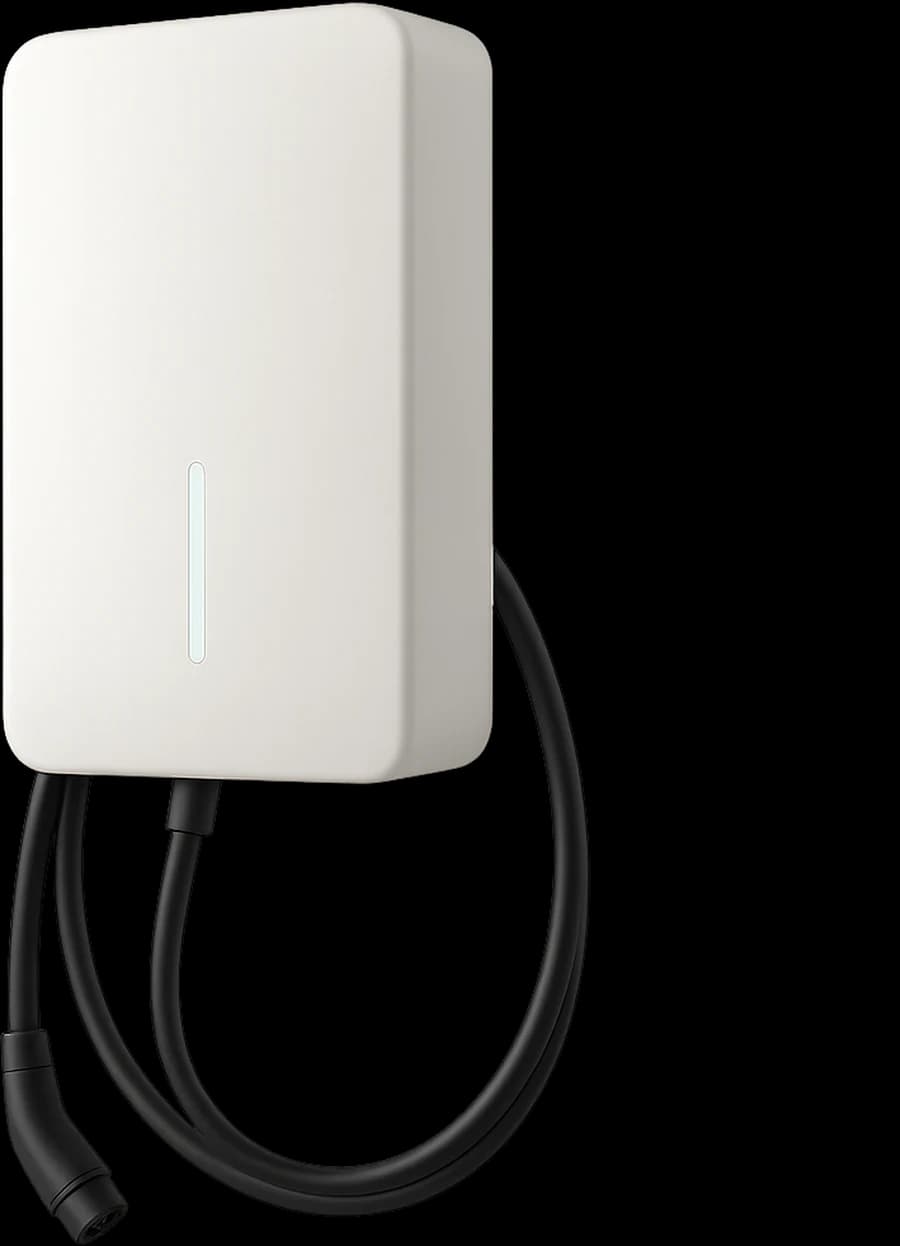
Sigenergy EV AC Charger
Solar surplus goes to the car without you touching it.
Built to talk to a SigenStor system, so the panels, the battery and the charger behave as one. Solar surplus goes to the car without you doing anything.
- Who it suits
- A home with a SigenStor system, or one going in. The panels, the battery and the charger are managed together, so surplus solar goes to the car without you deciding anything.
- What to watch
- Most of its advantage comes from the rest of the Sigenergy system. On a house with a different inverter you are paying for integration you will not use.
- 7kW, 11kW and 22kW AC
- Single and three phase
- Type 2 connector
- mySigen app
- Dynamic load management
- Solar surplus charging
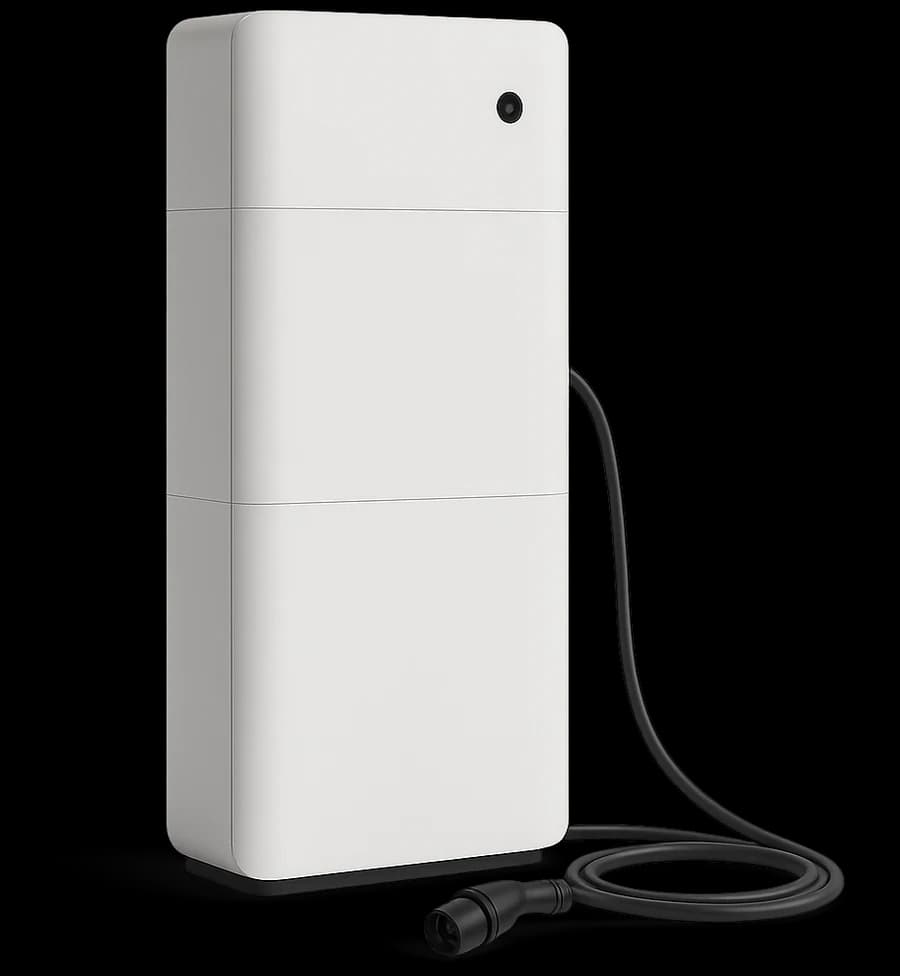
05 / 8
Sigenergy EVDC
DC straight off the solar and battery. V2X ready.
The one worth understanding. It charges straight from DC solar and battery power instead of converting twice, and it is ready for bidirectional charging, so the car can power the house.
- Who it suits
- The one worth understanding properly. It charges from DC solar and battery power directly instead of converting twice, and it is ready for bidirectional charging, so the car can run the house.
- What to watch
- It is a bigger piece of equipment and a bigger job than a wall unit. It earns its place on a property with real solar and storage, not as a faster charger on its own.
- 12.5kW and 25kW DC fast
- Bidirectional V2X ready, V2H and V2G
- Direct DC solar and battery charging
- CCS2 connector
- 150 to 1000V EV compatibility
- IP66
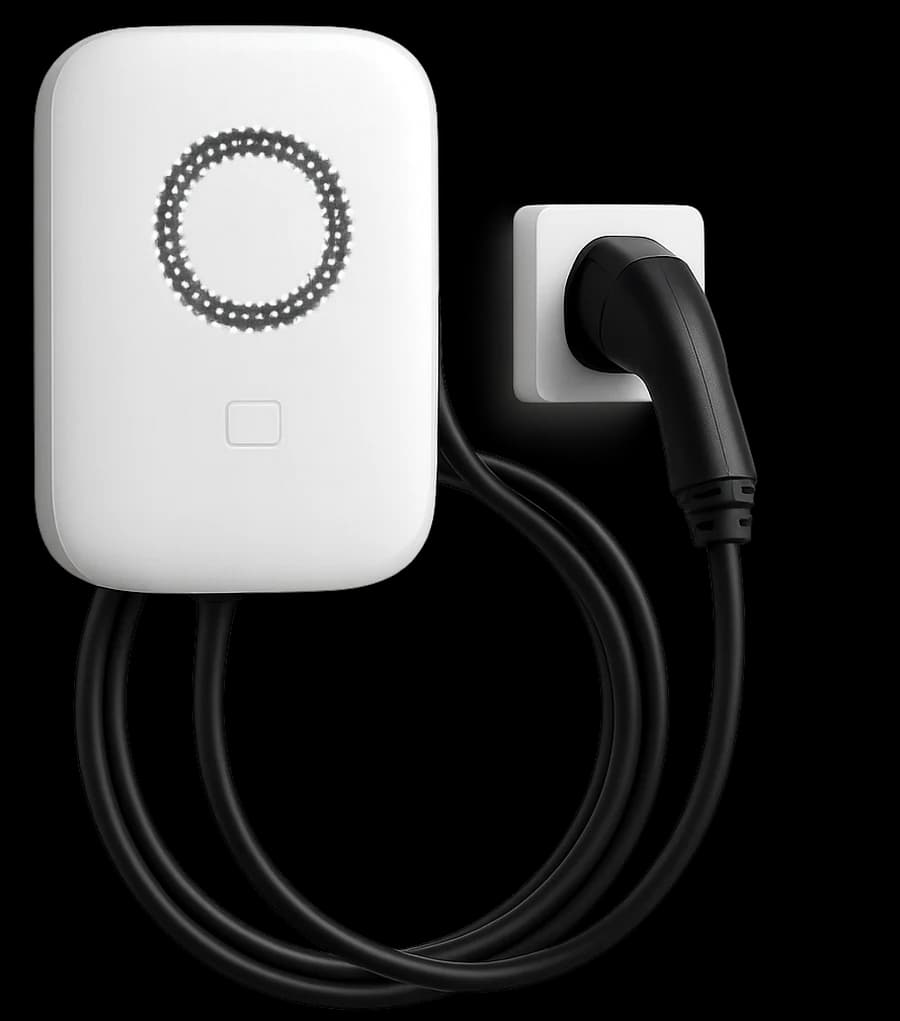
06 / 8
Sungrow AC22E
One app across the panels, the battery and the car.
Pairs with Sungrow inverters and batteries and reports through iSolarCloud, so one app covers the whole system. Rated IK10, which matters in a garage.
- Who it suits
- A house with Sungrow solar or a Sungrow battery, where one app across the whole system is worth having. Rated IK10 for impact, which is the one to pick for a working garage.
- What to watch
- Its smart charging is built around Sungrow gear. Alongside another brand of inverter it is still a good charger, it is just no longer the reason to choose it.
- 7kW, 11kW and 22kW AC
- Single and three phase
- Smart solar charging
- Dynamic load balancing
- iSolarCloud app
- IP65 and IK10
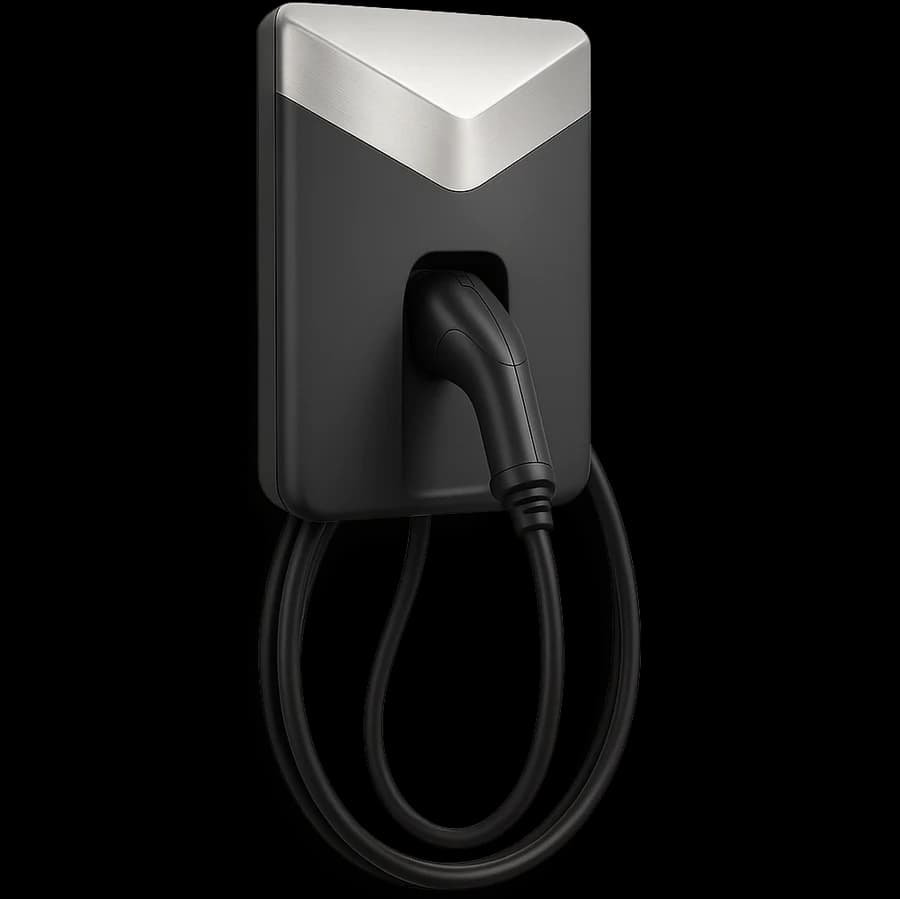
07 / 8
GoodWe HCA G2
The simple pick when GoodWe solar is already up.
The straightforward pick when there is already GoodWe solar on the roof. Intelligent charging control without another app and another login.
- Who it suits
- A roof that already has GoodWe solar on it. Intelligent charging control without adding another app and another login to the household.
- What to watch
- Same story as the others here: the value is in the pairing. Without GoodWe solar, pick on the hardware rather than the integration.
- 7kW, 11kW and 22kW AC
- Single and three phase
- Smart solar charging
- Dynamic load control
- SEMS app
- IP66
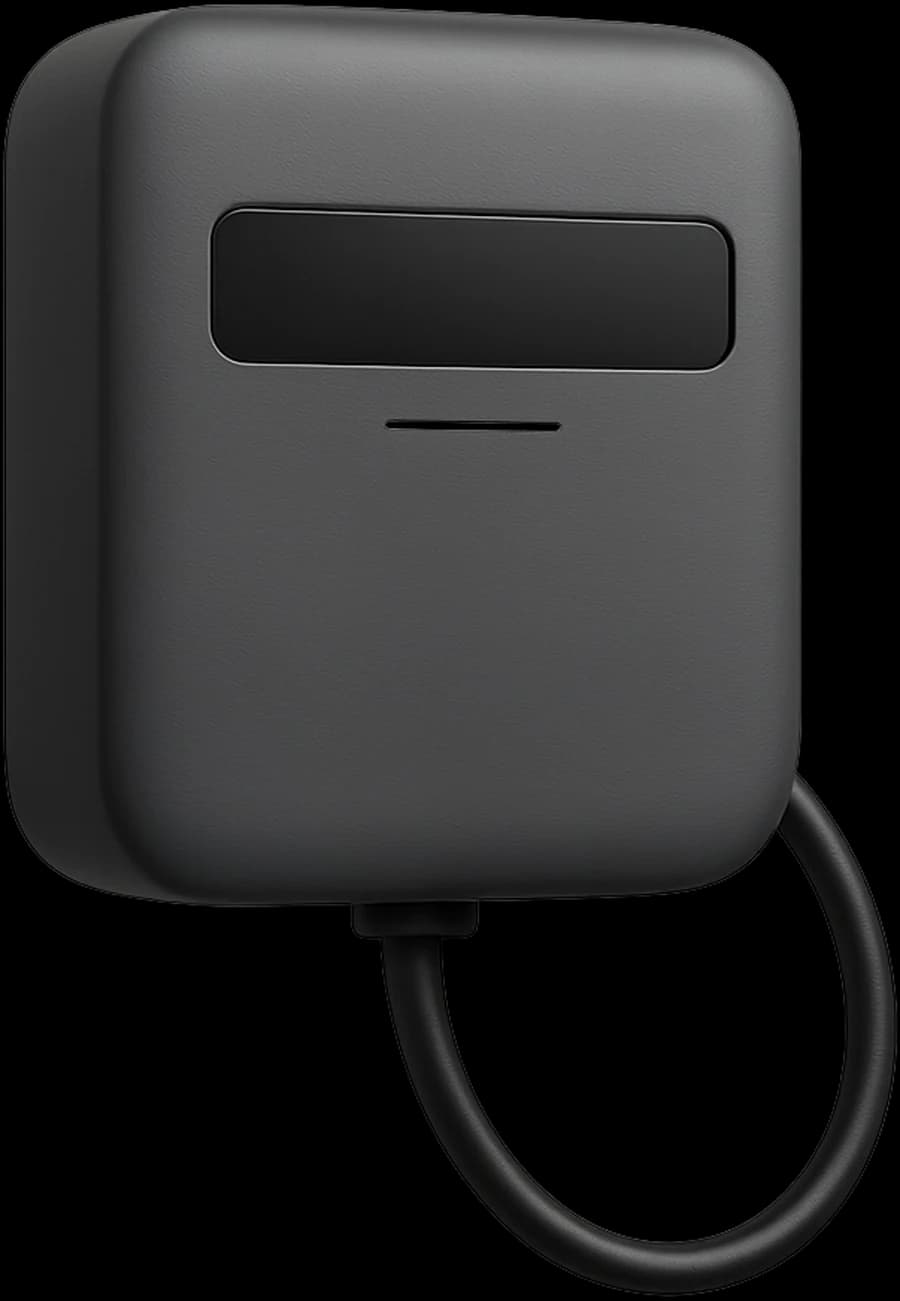
08 / 8
EcoFlow PowerPulse 2
Built around a PowerOcean battery, to keep charging off the grid.
Made for a PowerOcean home battery. It shifts between solar, battery and grid on its own to keep as much of the charge off the grid as possible.
- Who it suits
- A home with an EcoFlow PowerOcean battery. It moves between solar, battery and grid on its own to keep as much of the charging off the grid as it can.
- What to watch
- IP55, which is the lowest weather rating in this range. It is fine under cover; think harder about it on an exposed wall near the beach.
- 7kW, 11kW and 22kW AC
- Single and three phase
- AI smart solar charging
- EcoFlow app
- Dynamic load balancing
- IP55
How to choose
The Question That Decides It Is What You Already Own
Every unit here will charge your car properly. What separates them is how well they work with the rest of your system, so start there.
You already have solar
Match the charger to the inverter brand where you can. Sungrow with Sungrow, GoodWe with GoodWe, Sigenergy with SigenStor. That pairing is what lets surplus solar go to the car by itself, with nobody watching an app for the right moment to plug in.

You have a battery, or one is coming
This is where it matters most. A charger that talks to your battery can decide between solar, stored power and the grid on its own. On a Sigenergy system, the EVDC goes further and charges the car from DC directly, so the power is only converted once.

You drive a Tesla
The Wall Connector is the obvious pick and it is the most common charger in the country. It also charges most other EVs on Type 2, so it still makes sense if the household has a second, non Tesla car.
You have no solar and no battery
Choose on the hardware: the weather rating, the cable length, whether it is tethered, and whether it can share power with a second charger later. We will tell you which of those actually apply at your place.

You have three phase power
11kW and 22kW are on the table, and every unit here does both. Check your car before you pay for it though: a vehicle that accepts 11kW charges at 11kW on a 22kW charger.
True of all of them
What Every Unit Here Has in Common

They all use the Type 2 connector
Every AC unit we install uses the Type 2 connector, which is what new EVs sold here take. A charger outlasts a car, and this is what stops the next one being a problem.
Load management built in
Each of them can be told what the rest of the house is drawing and back off, which is often what makes a charger possible without upgrading your supply.

Installed to AS/NZS 3000
Whichever unit you pick, the circuit, the isolator and the protection are the same standard, tested before energising, with the certificate to match.

Serviced by us afterwards
We repair and service every brand we install, and we lodge and follow through the manufacturer warranty claim if a unit fails.
Know which one you want?
We install every one of these at homes and at commercial sites across the Gold Coast, and we service them afterwards.
Common questions
Questions About Choosing a Charger
There is no single answer, and anyone who gives you one is guessing about your house. All eight of them charge a car properly.
What separates them is how well they work with the solar, the battery and the switchboard you already have. Tell us what is there and we will narrow it to one or two.
No. If you have already bought a unit, tell us which one and we will say plainly whether we are happy to install and commission it.
Where we do supply it, you get the manufacturer warranty plus our ten year workmanship warranty on the installation, and we handle any warranty claim for you.
Yes, as long as it is Type 2, and every AC unit we install is. Type 2 is the standard for new EVs sold in Australia.
The Tesla Wall Connector is included in that: it charges a Tesla at full speed and will charge most other electric cars as well.
An AC charger sends alternating current to the car and the car's own onboard charger converts it. That conversion is what caps most homes at 7kW, 11kW or 22kW.
A DC unit like the Sigenergy EVDC converts it outside the car, so it can charge faster, and it can take DC straight off your solar and battery without converting it twice. It is a larger install and it belongs on a property with real storage.
It matters if you want surplus solar to go into the car by itself. A matched pair talks over one system, so the charger knows what the panels are producing and what the battery is doing.
If you have no solar, it makes no practical difference and you should choose on the hardware instead.
IP is the weather rating: how well the unit keeps dust and water out. The higher the second digit the better it handles rain, which matters on an exposed wall and matters more near the beach.
IK is the impact rating. IK10 is the toughest, and it is the one to look at if the charger is going somewhere it could get knocked in a working garage.
Ready to make the switch?
Get a Free Quote
for EV Charger Installation
Speak with our local Gold Coast team and get expert advice, a tailored solution and a no-obligation quote.
Request a Free Quote
Fill in the form below and we'll get back to you shortly.
No obligation. Just expert advice.
- Cleaner CommunitiesA brighter Gold Coast.
- Trusted Local ExpertsHere for the long term.
- Powering a Sustainable FutureFor generations to come.