
Summarise this with AI
Opens your assistant with this article already loaded.
Key highlights
- Solar surplus put into a car is worth several times what exporting it pays.
- The charger has to be able to talk to your inverter, which is a compatibility question.
- Surplus-only charging uses nothing from the grid, and it is slower by design.
- A blended mode tops the car up from the grid when the sun is not enough.
- This suits people who are home during the day, or who can charge on weekends.
- Tell an installer your inverter brand before you choose a charger.
Why Surplus Is Worth More in the Car
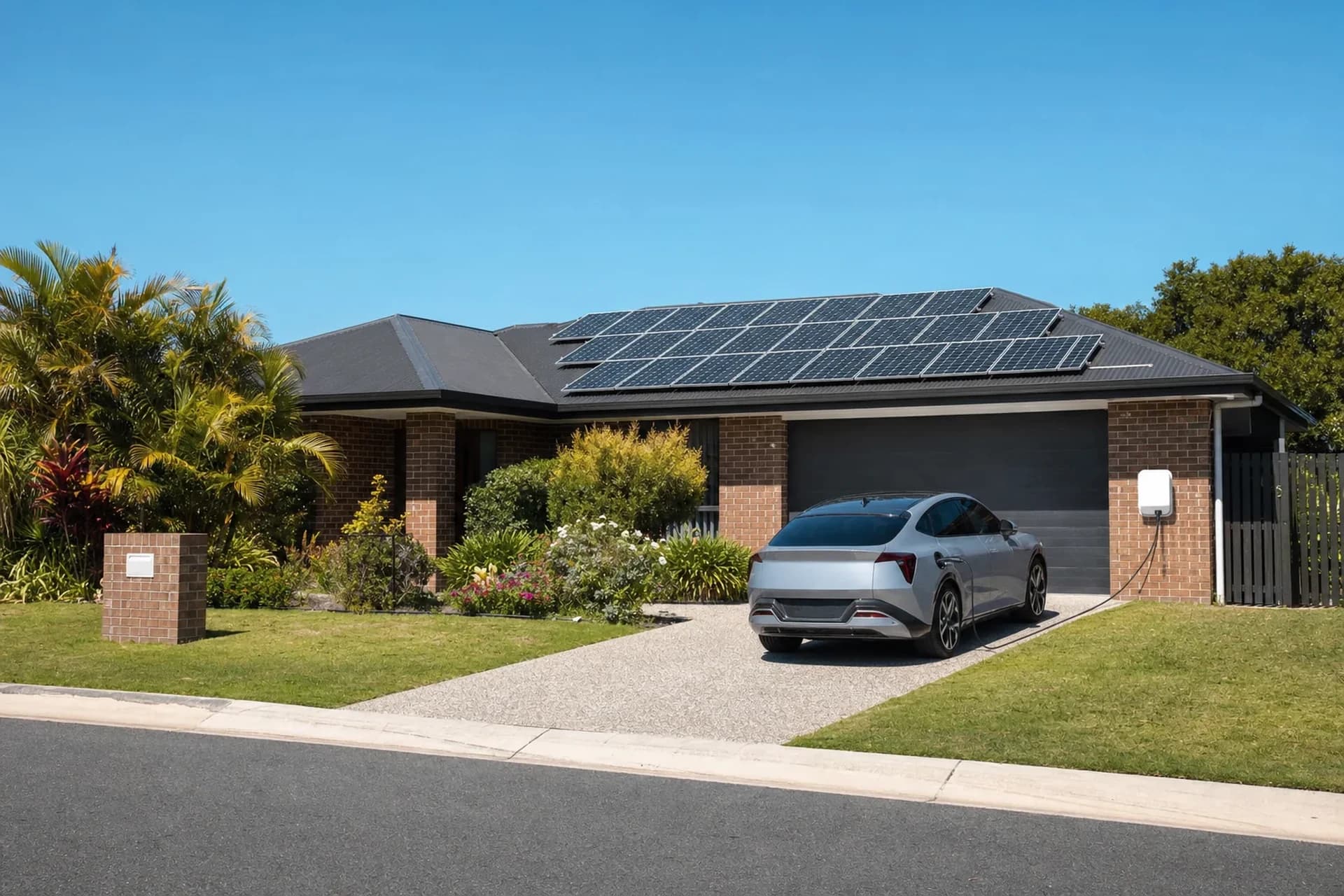
A rooftop solar system makes its most power in the middle of the day, which is exactly when most households use the least. What the house does not use gets exported to the grid, and you are paid a feed-in tariff for it.
Feed-in tariffs have fallen a long way. Exporting a kilowatt hour now returns a fraction of what buying one back that evening costs you. Every unit you can use yourself instead of exporting is worth the difference between those two numbers.
A car is the largest thing in a typical house that can absorb that surplus. It will happily take everything a domestic system can make and ask for more.
How a Charger Knows There Is Surplus
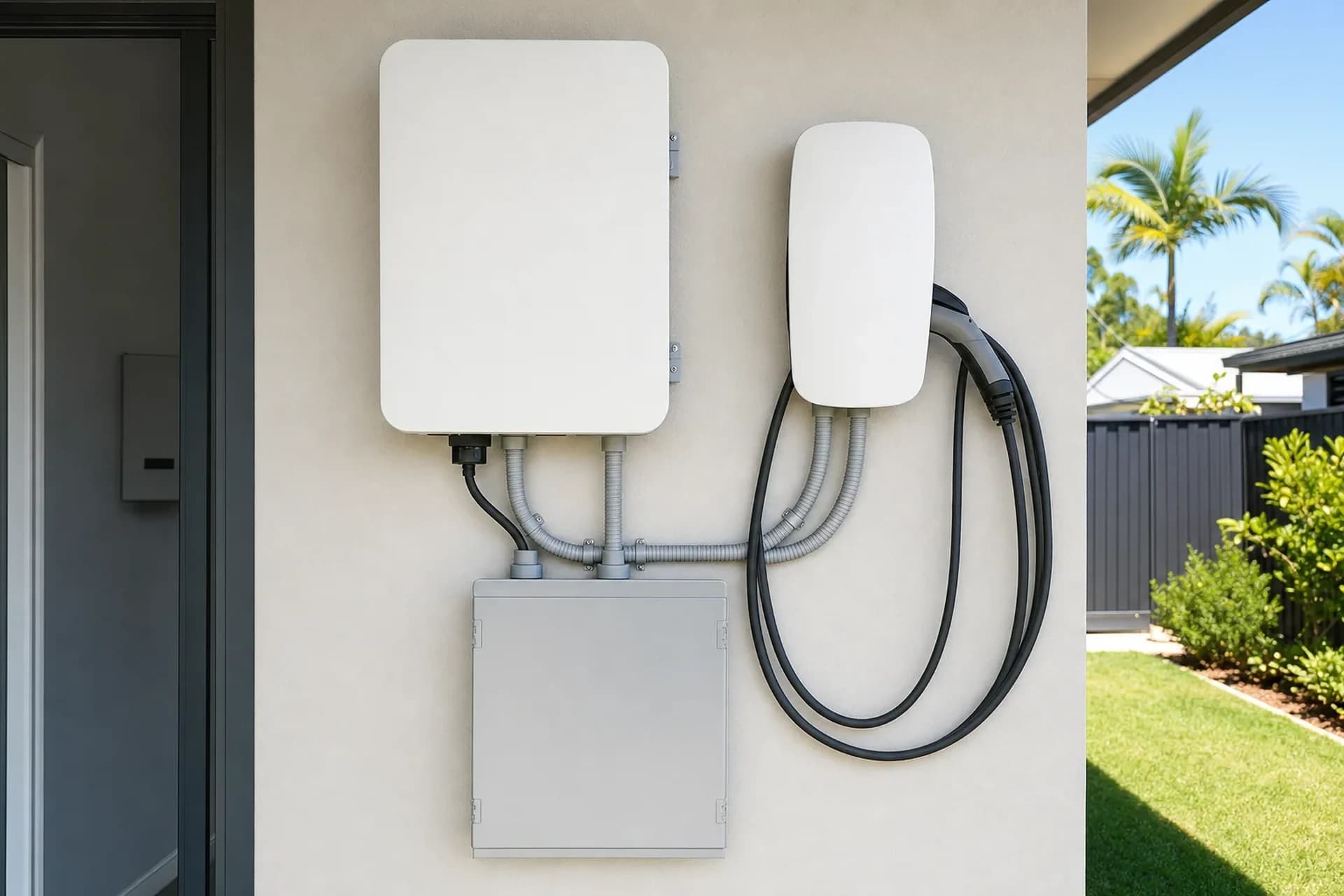
The charger needs to know, moment to moment, how much power the house is making and how much it is using. That information comes from a meter at the switchboard or from the inverter itself.
With that reading, the charger raises and lowers what it sends to the car to match whatever is spare. A cloud goes over and it backs off. The sun comes out and it picks up again.
This is the same mechanism as load management, which is the feature that lets a charger use whatever capacity the rest of the house is not drawing. Solar charging is that idea pointed at the roof instead of at the supply.
The Two Ways People Actually Run It
Most people who set this up end up using both, surplus only on weekends and blended overnight during the week.
- Surplus only. The car takes nothing but what the panels are spare. It charges slowly, it stops when the sun goes, and it costs you nothing from the grid. Best if the car is home during the day.
- Blended. The charger uses the surplus first and makes up the difference from the grid to hit a target by a set time. Best if you need a certain amount of range by morning regardless of the weather.
What Has to Match, and Why It Is Chosen Together
This is the part that goes wrong when the charger is bought first. Not every charger talks to every inverter, and a charger that cannot see your generation cannot chase it.
Some brands pair tightly with their own inverters and batteries, so the panels, the storage and the car behave as one system. Others read a separate meter at the switchboard, which makes them brand agnostic.
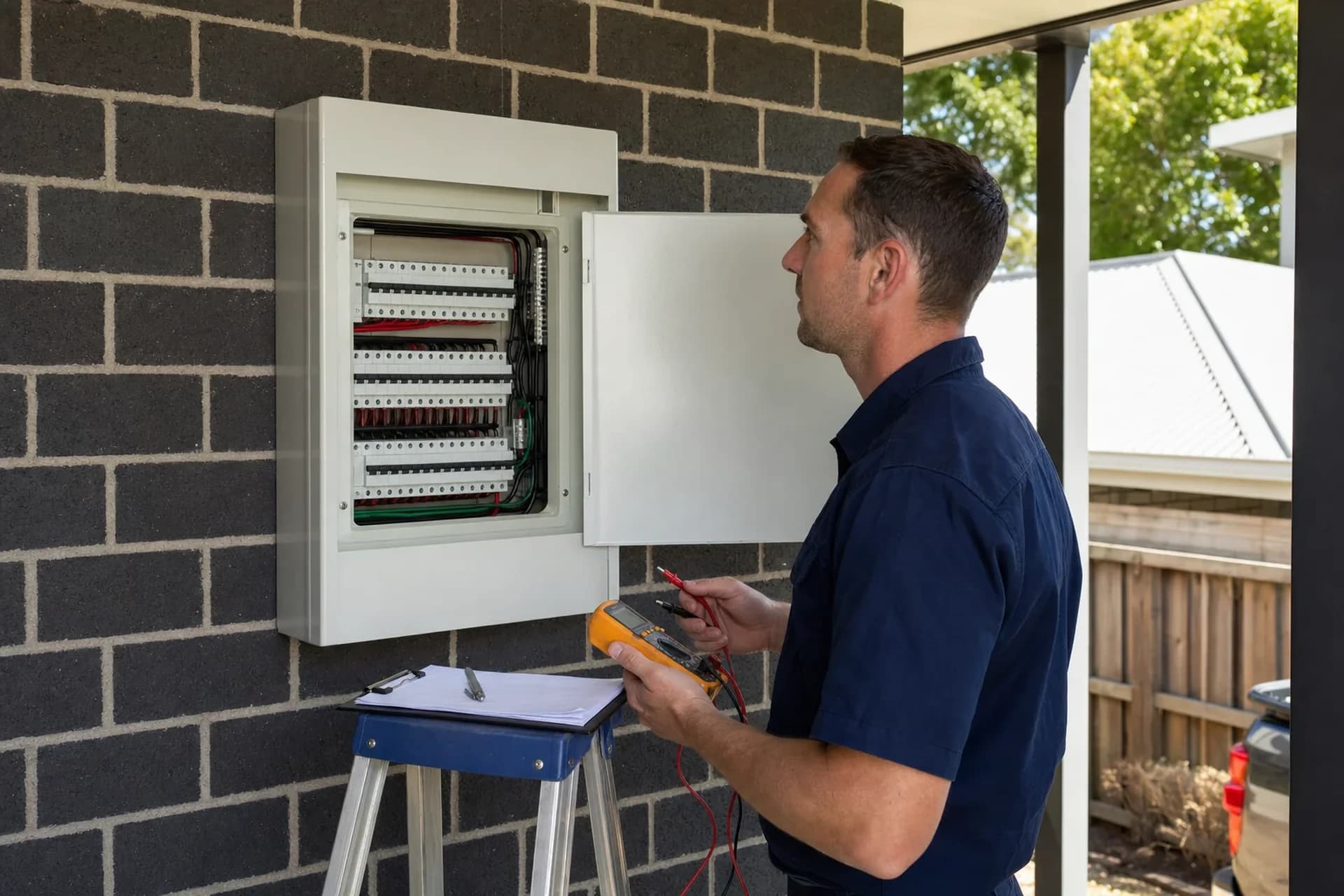
Either can be the right answer. What makes it easy is naming your inverter before anyone recommends a unit, which takes one look at the wall.
Where a Battery Changes the Picture
If you have home storage as well, there is a decision about who gets the surplus first, the battery or the car.
There is no single right answer. A battery gives it back to the house that evening. A car turns it into driving. Systems that manage both together let you set an order and a reserve, so the house keeps a buffer and whatever is left goes out to the car.
If You Do Not Have Solar Yet
It is worth having the conversation once, before the charger goes on the wall. Adding panels later is normal, and picking a charger now that can talk to an inverter later costs nothing extra.
Doing it the other way around means replacing a charger that works perfectly well, purely because it cannot see the roof.
Questions People Ask
No. The charger needs a way of seeing what the house is generating and using, either from the inverter directly or from a meter at the switchboard.
A basic charger with no such input will charge at a fixed rate whether the sun is out or not.
It depends entirely on your system size, your household use and the weather, so any single number would be misleading.
The useful way to think about it is that surplus you would otherwise export is worth far more in the car, whatever the amount turns out to be on the day.
In surplus-only mode it charges whenever there is spare generation, so on a dull day it will be slow and intermittent.
In blended mode it makes up the shortfall from the grid to reach your target, so the weather changes the cost and not the outcome.
No. Solar charging works from the panels directly and a battery is a separate decision.
If you have both, you set which one gets the surplus first and how much the house holds back.
Your inverter brand and model, whether you have a battery, and roughly when the car is at home during the day.
Those three answers narrow the choice immediately and stop you buying a unit that cannot do what you wanted it for.